Ilocano not Igorot, not an Aeta, Krishna Marie Gravidez wins Miss World Philippines 2024

Not Igorot, not Aeta but an Ilocano of Baguio wins Miss World Philippines 2024, following the recent public anger when Aetas were mistakenly said to be in Itogon, Benguet by a popular blogger and a veteran broadcaster. A perfect example of point of view of humans, disowning what they hate and embracing what that gives honour and favour.

Krishnah Marie E. Gravidez (born October 11, 2000) is a Filipino beauty pageant titleholder who was crowned Miss World Philippines 2024. A youth advocate, Gravidez will represent the Philippines at the Miss World 2025 pageant. 

Gravidez previously represented Baguio at the Miss Universe Philippines 2023 pageant. Finishing as a top five finalist, she was appointed as the country’s delegate to the Miss Charm 2024 pageant before withdrawing from the competition to represent Baguio in Miss World Philippines 2024, where she was named the winner.

Gravidez was born on October 11, 2000, in Ilocos Sur. She began studying industrial engineering at the Saint Louis University in Baguio before transferring to the University of Northern Philippines in Vigan to pursue a degree in civil engineering. In an interview on the variety show Wowowin in 2019, Gravidez stated she uses the cash incentives she earns from her stints in pageants to pay for her education.

Miss Universe Philippines 2023

On February 18, 2023, Gravidez was introduced as one of the 40 delegates competing in the fourth edition of the pageant, serving as the delegate of Baguio after having previously been selected as Miss Baguio 2022. Her performance in the preliminary rounds was received positively online, with praise directed in her performance in the swimsuit round. In the national costume round, Gravidez wore a Strawberry-inspired ensemble designed by Erjohn dela Serna. The costume was made from Cordilleran textiles and featured a kabayang basket. Her costume reaped her the “Tingog ng Filipina” award for Luzon.

In the pageant proper, she won the Best in Swimsuit award. Subsequently, she advanced to the Top 5, where she, and her co-finalists, were asked “For you, what is the best that we can offer to the rest of the world? Why do you consider it so?”, alluding to the Department of Tourism’s new branding campaign. She responded:

“Having to struggle at a very early age, I have uncertainties. But I’ve received kindness a lot of times. So now, aside from it’s free, I give kindness to everyone. Because this kindness can go a long way, can motivate someone, can give radiance to rainy days. Because this kindness also made me transform myself from a woman who have nothing to a woman who has the universe on her doorstep.”

At the end of pageant, Gravidez finished as a Top 5 finalist to Michelle Dee, who won the pageant to become the Philippines’s delegate to Miss Universe 2023. Following Gravidez’s finish at the Miss Universe Philippines 2023 pageant, she was appointed as Miss Charm Philippines 2024 in a ceremony at the Okada Manila. The city government of Baguio issued a resolution honoring Gravidez for her appointment to the title and was honored with a motorcade organized by the city’s tourism office. While Miss Charm Philippines 2024, Gravidez participated at the 12th Mindanao Fashion Summit held at Cagayan de Oro.

Miss World Philippines 2024

As Miss Charm Philippines, Gravidez was the country’s delegate to the Miss Charm 2024 pageant in Vietnam. Amid uncertainties in the pageant, she announced her withdrawal on June 2, 2024, more than a year after her designation. A day following her withdrawal, Gravidez was introduced as part of the second set of candidates for Miss World Philippines 2024, designated as the delegate of Baguio. In an interview with The Philippine Daily Inquirer, Gravidez revealed that she had been tapped by the pageant’s accredited partner for Baguio to represent the city in the national pageant since April 2024.

Gravidez won four special awards in the charity gala held on July 18. The pageant was held the following day at the SM Mall of Asia Arena, where she would win all three major awards—Miss Photogenic, Best in Swimsuit, and Best in Evening Gown—and seven special awards from the pageant’s sponsors. Gravidez advanced to the top 20 through winning the Top Model and Miss Multimedia fast track challenges. She progressed to the top ten question and answer portion, where she was asked “Should inclusivity be a top priority among pageants? Yes or no? Explain your answer”. In her answer, she noted the role of pageants as platforms for advocacies and stated that humans must adapt to an evolving world.

Gravidez went on to win the pageant, being crowned by her predecessor Gwendolyne Fourniol and Krystyna Pyszková, Miss World 2023.

Advocacy

Gravidez established the non-profit Colors of Kindness charity, which advocates for the welfare of children and the youth

Source: Wikipedia

Advertisements

Ilocanos and Igorots treat animals equal

Ilocanos and Igorots, being regionally close to each other, have a lot in common. They share commonalities on their language hence they can understand each other. They also share the same attitude towards animals. They don’t discriminate dogs, from goats, pigs, cows, cats, chicken, carabao, etc. They treat them all the same and equal.

This is true when visiting Baguio most especially in the 1980s to 1990s. When Igorots go to the lowlands to visit relatives or friends, the nice smell of a goat will add to the warmth hospitality and interaction of the Ilocano host and the Igorot guests. The same thing when an Ilocano visits an Igorot friend or relative in Baguio, most especially during the cold seasons, the Igorot host will make sure there’s a warming experience for his Ilocano guest. This is by bringing the guests to visit dogs at Sagada Lunch.

Either way, both appreciate each other’s hospitality. They don’t discriminate each other, instead they will be equally appreciative to each other. In fact, everytime they visit each other, they are both happy seeing any of their pets, be it a dog, cats, pigs, goats, etc.

However, todays rhetorics have changed everything. Ilocanos and Igorots were taught by strangers and foreigners to treat dogs as man’s best friend, cats as something with 9 lives, etc. Civilisation taught Igorots and Ilocanos how to be discriminatory towards animals.

Additionally, Philippine History shows no serious tribal war between Ilocano and Igorots. They can jokingly mock each other but not the point of causing fatal injury to each other. Even the spoiled brat members of Samahang Ilocano and Igorot Wakad gangs in schools in the old days, they both behave like big dangerous gangs but they are actually nothing but just the same pulutan boys.

Take note: Please read this article with a little bit of art, and not too serious. The intention was to make you smile. No animals were hurt in making this article.

Advertisements

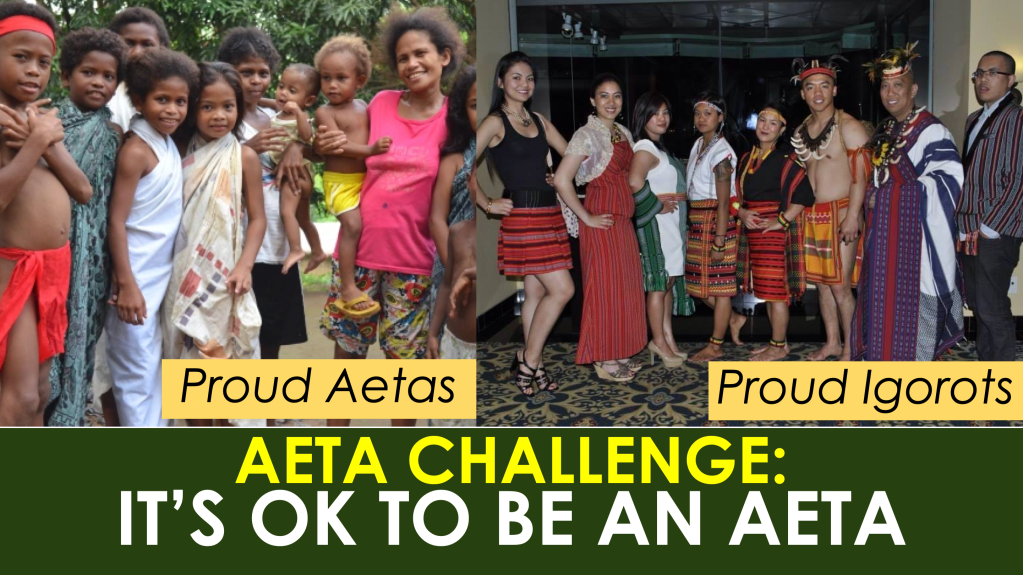
AETA CHALLENGE: It’s OK to be an Aeta

Igorots are proud to be Igorots. Tagalogs are proud to be Tagalogs and so as Ilocanos, Cebuanos, etc. So why not being an Aeta? Aetas are an indigenous people inhabiting the central and southern Zambales. Let us help the Aetas be proud to be Aetas. They are just the same as ours. They were just introduced to civilisation behind us. They can also become to what we are now!

It has been obvious on some comments on our previous article that so many people have bad connotations about Aetas. Some were even so reserved to write or speak the word Aeta. That’s not different from being a racist!

According to Merriam-Webster Dictionary, “Aetas are an indigenous people inhabiting the central and southern Zambales mountains in Zambales, Pampanga, and Bataan provinces of the Philippines.” Aeta are just same people as you! Aetas are humans and are no less than anyone! You should proudly address them as Aetas, with respect and confidence!

If you are afraid or reserved to say the word Aeta, you are RACIST!

It,s only in America and the Western world where racism exist where calling someone “Black or Coloured, or White” is branded as racist.

Igorots are the champions of defeating racism. The word Igorot has long time been a racist and discriminatory word of non-igorots but we defeated it by owning it instead and making it a brand. Other Filipinos can no longer think they are superior than us Igorots. Ironically, we Igorots now sometimes take so much pride and think or act as if we are better tribe than others; and that is not good. Aetas, Igorot, Ilocanos, Tagalogs, and all Filipinos are just the same Filipinos. We all eat rice by our mouth and excrete it by our anus!

Let us help Aetas be proud to be an Aetas! and that’s our Aeta Challenge!

Advertisements

How was Cordillera Created?

Malacañang has declared July 15 a special non-working holiday in the Cordillera Administrative Region (CAR). But how was this region of freedom, autonomy and cultural diversity created?

CAR is commemorating its 35th founding anniversary on July 15 after it was created through Executive Order 220 which was a result of successful peace talks with the local armed group – Cordillera People’s Liberation Army (CPLA) led by former priest Conrado “Ka Ambo” Balweg. CPLA is a break-away group from communist People’s Army (NPA) which is also the merger of Abra Province’s Tingguian Liberation Force in 1986, forming the Cordillera Organisation with the aim to fight for self-determination of the people of Cordillera.


The Philippine national government thru former President Corazon Aquino initiated talks with the rebel group in September 13, 1986 at Mt Data Hotel, Bauko, Mt Province. Adopting the local practice of “bodong” (peace talks), the parties went thru “sipat” (exchange of peace tokens) that led to the issuance of the EO creating the Cordillera Administrative Region in preparation for becoming an autonomous region. This is called the 1986 Mt Data Peace Accord.

In 1999, Conrado Balweg was assasinated by the NPA.

CPLA agreed and signed with the Philippine Government on July 04, 2011 for its closure or dissolution; bringing the rebel organisation to disarm and reintegrate into the mainstream society. Today, any rebel group left in the Cordillera are factions that are only fighting for their personal interests and not for the people of Cordillera.

Advertisements

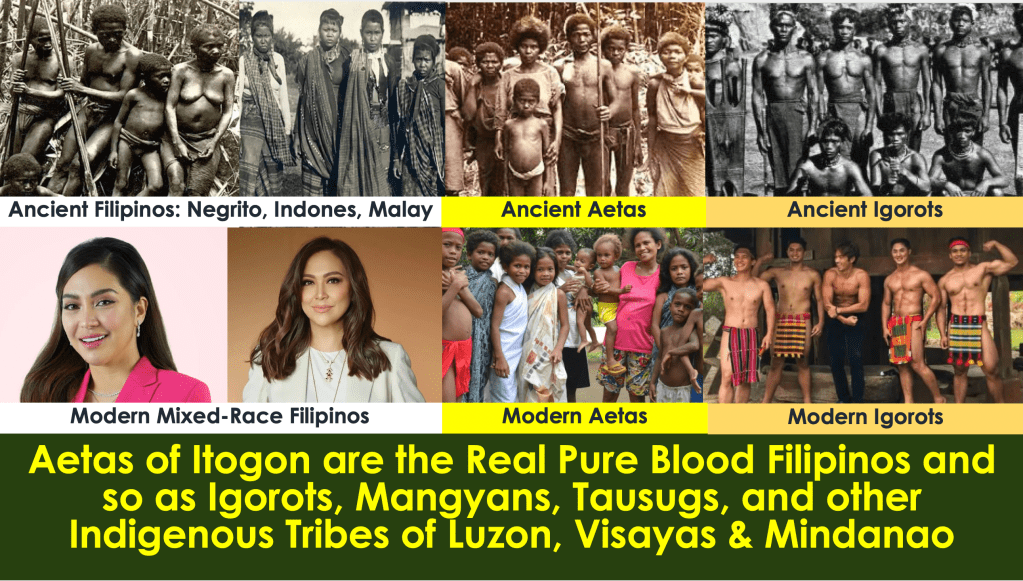
Aetas of Itogon are the Real Pure Blood Filipinos and so as Igorots, Mangyans, Tausugs, and other Indigenous Tribes of Luzon, Visayas & Mindanao

Aetas of Itogon are the Real Pure Blood Filipinos and so as Igorots, Mangyans, Tausugs, and other Indigenous Tribes of Luzon, Visayas & Mindanao. They are the original inhabitants of the Philippines. The looks of Miss Glenda and Miss Karen Davila are the result of inter-racial mixture of Filipinos and foreigners.

Modern Filipinos found in Central Luzon and Visayas such as in Manila and Cebu are descendants of indigenous tribes that had inter-racial mixture with foreigners who migrated or colonised the country, such as Chinese, Malays, Spanish, Japanese and others. This happened even before the year 1500s when Philippines was first discovered or found by European Sailor Magellan. This means Filipinos in Manila and Cebu came to civilisation many centuries before indigenous Filipinos of the mountains and outskirts of the country were discovered.

Real Pure blood Filipinos like the Igorots of the Mountains of Cordilleras remained pristine and were just introduced to civilisation probably in the late 1800s. The Aetas of Central Luzon were lately discovered or introduced to civilisation probably in mid 1900s. Even if they were almost just recently introduced to civilisation, they are now almost of the same transformation with the other Filipinos in the cities who were earlier brought to civilisation.

If all indigenous tribes were discovered and introduced to civilisation at the same time with those in Manila and Cebu, the looks of Igorots, Aetas, Mangyans, Tausugs and other indigenous people will be the same or far better than the looks of Miss Glenda or Karen Davila.

Nevertheless, races of people, indigenous or mixed-race, have their own beauty. The looks of people should never be used to discriminate one from the other. Each race and culture have their unique beauty and identity.

P.S.: There are no Aetas in Itogon. Title is just a Literary Art. Aetas and Igorots are both indigenous peoples with respective culture, history and beliefs.

Advertisements

A Farmer’s Daughter, TCC Scholar, finishes degree with cum laude

A proud farmer’s daughter and hardworking student, Karryle P. Piaga, 23, from Buguias, Benguet, a scholar of sponsors at The Cordillera Connection (TCC), attains her degree in Bachelor of Science in Development Communication at Benguet State University with an award of distinction or cum laude.

Financial difficulties did not stop Karylle to pursue her dream of getting a degree in the university, with a hope that her education can help her family to get out of poverty, not having to forever endure the hardships working in the farm and the ever changing prices of crops that gives them uncertainties when it comes to their livelihood.

Karylle reached out to The Cordillera Connection community to ask for help with her financial needs at school. A generous sponsor, an overseas worker, even agreed to provide her a laptop.

“Ti challenges a napadasak ket ti pinansiyal gapu ta kasapulan nga agbayad para iti boarding ken kasapulan nga aggatang ti materyales para iti pagadalan kas ti laptop. Gapu iti Cordillera Connection, adda ti nagsponsors kadagiti usarek kas ti laptop agingga second year college.” “English: The challenges I faced was financial difficulties as I needed to pay my accommodation and I needed to buy materials for school such as laptop. Because of The Cordillera Connection, some people sponsored my needs such as the laptop.

Karylle worked as student assistant at the university and as a bagger at a Korean shop to augment her needs. She struggled during the pandemic online classes but was able to turn the tides and performed well when classroom education resumed.

The Cordillera Connection Congratulates Karylle, her parents and her kindhearted sponsors.

Cebu Pacific dominates Philippine Airlines with its 152-aircraft purchase order worth $24B with Airbus

Low-cost carrier Cebu Pacific continues to dominate the Philippine air travel industry and overtakes the country’s flag carrier, Philippine Airlines, with its purchase order of about 152 new aircrafts from Airbus amounting to $24-billion (P1.4 trillion), so far the biggest deal in Philippine aviation history.

The low-cost airlines company, owned and controlled by tycoon Lance Gokongwei and his family’s conglomerate JG Summit Holdings, holds a fleet of about 85 Airbus and some smaller ATR turboprop aircraft, and an existing order book of more than 30 planes from the European manufacturer. It plans to expand operations to maintain domination in the domestic aviation market and keep its healthy share position against the resurgent Philippine Airlines.

Airbus thanks Cebu Pacific for its ongoing confidence in Airbus and its products, and is looking forward to finalising the contract. According to Cebu Pacific’s CEO Mike Szucs, when finalised, the deal will be a significant milestone for the local airline industry.

One-Time
Monthly
Yearly

Make a one-time donation

Make a monthly donation

Make a yearly donation

Choose an amount

£5.00
£15.00
£100.00
£5.00
£15.00
£100.00
£5.00
£15.00
£100.00

Or enter a custom amount

£

Your contribution is appreciated.

Your contribution is appreciated.

Your contribution is appreciated.

DonateDonate monthlyDonate yearly
Advertisements

Baguio and Cordillera’s Iconic Newspaper Comes to an End

Baguio Midland Courier, the iconic newspaper of Baguio City and the whole Cordillera region has announced today that it will be ceasing its operations effective July 22, 2024. It is now expected that there are only has 3 remaining publications before it stops operation.

The people’s favourite newspaper operated for 77 good years with its first publication on April 28, 1947, just a couple of years from the end of World War II, when it was founded by Atty Sinai Hamada. It released a 4-page newspaper with 200 copies on its first publication until it became the pioneer in printed journalism in Baguio City and the whole Cordillera region. Baguio Midland Courier remained a strong medium of information with is Sunday publications even the arrival of the internet and online age where news articles and published materials are easily accessible on smartphones and other devices.

It has become the favourite newspaper due to its wide coverage of the culture, business and economy, politics and governance and others aspects and issues that matters to the lives of Baguio City people and the Cordilleras. Not only because of it’s wide reach to information but also by involving the contribution of people’s thoughts and opinion and thru catering the literary contribution of its readers. I for one, made a contribution on its one of its weekly mail column.

Most especially, it was a favourite medium of information as it has always maintained impartiality on issues that divides the people, something that most journalists and broadcasters fail to abide by in the name of journalism. Thank you Baguio Midland Courier!

One-Time
Monthly
Yearly

Make a one-time donation

Make a monthly donation

Make a yearly donation

Choose an amount

£5.00
£15.00
£100.00
£5.00
£15.00
£100.00
£5.00
£15.00
£100.00

Or enter a custom amount

£

Your contribution is appreciated.

Your contribution is appreciated.

Your contribution is appreciated.

DonateDonate monthlyDonate yearly
Advertisements

Davao City: The largest city in the Philippines

The City of Davao, a 1st class highly urbanized city in the island of Mindanao, has a total land area of 2,444 sq.km., making it the largest city in the Philippines in terms of land area.

Based on the 2020 Census of Population and Housing, Davao City has a total population of 1,776,949, becoming the first City in Mindanao and the Visayas, and the fourth nationwide, to exceed one million inhabitants. The increase in the City’s population during the 20th century is attributed to the massive migration waves coming from other parts of the nation and the in-migration trend which continues to this day.

Majority of residents of Davao City or  Davaoeños are Visayans which are mostly Cebuanos and Hiligaynons. The others different ethnicities are collectively categorized as the indigenous communities which make up the remainder of the local population.

There are also Islamized group that makes up the city population which are the Maguindanaons, Maranaos, Iranuns, Tausugs and the Sama-Bajaus. Non – Filipino Asians such as Indonesians, Malaysians, Taiwanese, Chinese, Filipinos, Koreans, Japanese and Indians have settled and made small communities in Davao City. Non-Asian foreigners such as the Americans and Europeans are also residing in the City.

Agriculture is the largest economic sector in Davao City, comprising of banana, pineapple, coffee and coconut plantations. The City is Mindanao’s leading exporter of fruits such as mangoes, pomelos, bananas, coconut products, pineapples, papayas, mangosteens and cacao.

Davao City’s latest agri-based development is the chocolate industry. Actually, the country’s leading artisan chocolate recognized worldwide is Malagos Chocolate, developed by Malagos Agriventures Corp. On the other hand, the country’s biggest exporter of cacao to Barry Callebaut is the Seed Core Enterprises which is also based in Davao City. Banana is the largest fruit export of the City and the locally grown and harvested durian is also a notable export. This is the reason why the operations and headquarters of Local corporations such as the Lorenzo Group, Anflo Group, AMS Group, Sarangani Agricultural Corp. and Vizcaya Plantations Inc. are based in Davao City. Even multinational companies such as Dole, Sumifru/Sumitomo and Del Monte, have their regional headquarters in the city.

In the Fish Industry, the source of livelihood of many fishermen is the Davao Gulf. It abundant with fish and sea food such yellow fin tuna, brackish water milkfish, mudfish, shrimp and crab. 

Dave City also serves as the main trade, commerce, and financial industry hub of Mindanao. The Phoenix Petroleum, a multinational oil company, is based in Davao City and is the first company in the Philippines based outside Metro Manila to be in the PSE Composite Index. Industrial plants of Coca-Cola Bottlers, Phil., Pepsi-Cola Products, Phil., Interbev Phil Inc. and RC Cola Phil., are also some of big companies that operates in the City. Industrial construction plants such as Holcim Philippines, Union Galvasteel Corporation, and SteelAsia also operates in Davao City, SteelAsia plant, now being the largest and most modern steel rolling mill production facility in the country.

BDO Network Bank (formerly One Network Bank) is based in Davao City and is the largest rural bank in the Philippines in terms of assets.

Davao City, being a domestic and international gateway to other visitor destinations in the island, is also a premiere tourist destination in Mindanao. The city offers a combination of nature-based, man-made, historico-cultural, adventure and sports, special interest, religious, educational, agro-industrial, attractions, pleasure and entertainment, festivals, dining and shopping. Popular tourist attractions include Mt Apo, the highest mountain in the Philippines, The Philippine Eagle, Philippines’ biggest Crocodile in captivity, Araw ng Dabaw and Kadayawan Festivals.

Notable Awards & Citations of Davao City

  • 2nd Most Competitive Highly-Urbanized City (2020)
  • Red Orchid Awardee (Anti-Smoking Campaign) “Hall of Fame” (2015, 2014, 2012, 1999, 1998)
  • Child Friendly City (2015, 2014, 2012, 1999, 1998)
  • 1st Price Winner and Hall of Famer (2012) in the National Literacy Award for Outstanding LGU, Highly Urbanized City Category
  • Consistent Performing LGU in the country 2009-2011
  • Best Practice Award for LGU HIV Prevention Seal of Good Housekeeping (2011)
  • 2009 Philippine’s Most Livable City (https://davaohive101.wordpress.com/)
  • One of the Only Three Areas in the World to have the Integrated Emergency Response System 911 as Top 25 Best Practices in the Philippines

Source: NEDA

Advertisements

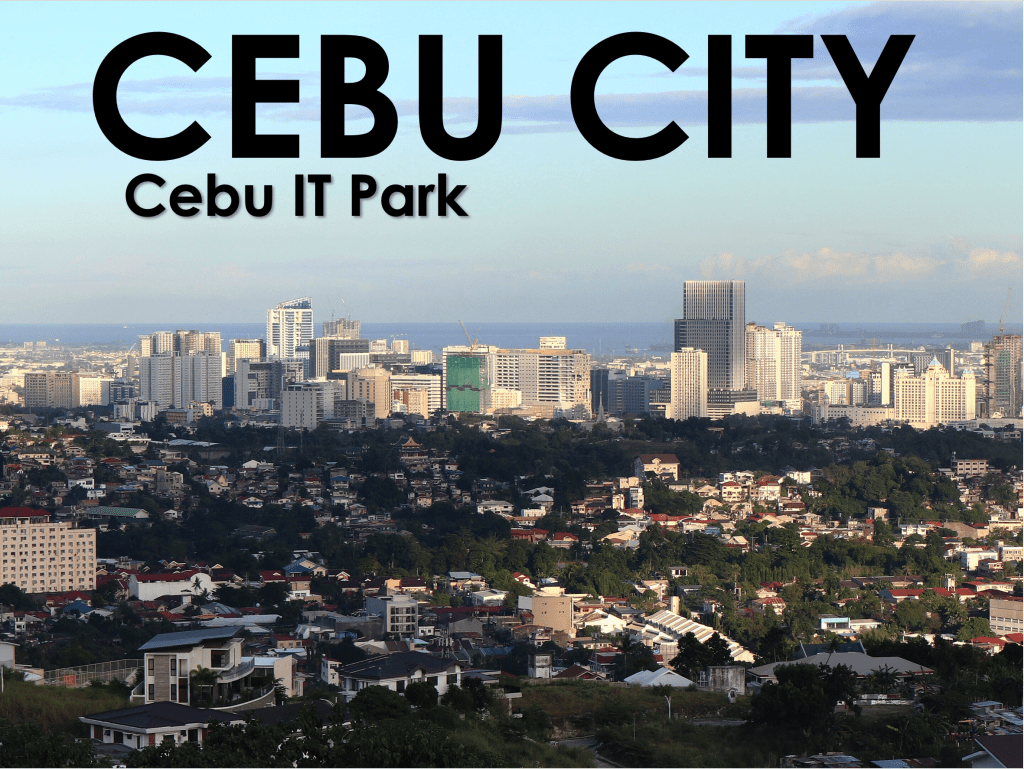
Cebu City: The Oldest City and The First Capital of The Philippines

Cebu City is the oldest city and first capital of the Philippines. Being the first Spanish settlement in the country, the city became the birthplace of Christianity in the Far East. During the 300- year Spanish rule , Cebu built the country’s oldest university, San Carlos University, as well as the oldest street, Colon Street.

Today, Cebu City, is the capital of Cebu Province, an island 365 miles south of Manila and the home of the Cebuanos. Based on 2020 census, Cebu City has a population of 964, 169.

Cebu City is now a commercial center for different industries such as being one of the major hub for business process outsourcing (BPO), banking, finance, IT, tourism, copper mining, fishing and aquaculture, farming and agriculture, shipbuilding, steel and cement. The harbor of Cebu City serves both international ocean-going vessels and domestic ships and five inter-island shipping companies, hence the prime centre of trade of Southern Philippines.

Photos by Project Lupad and Wikipedia.

Advertisements